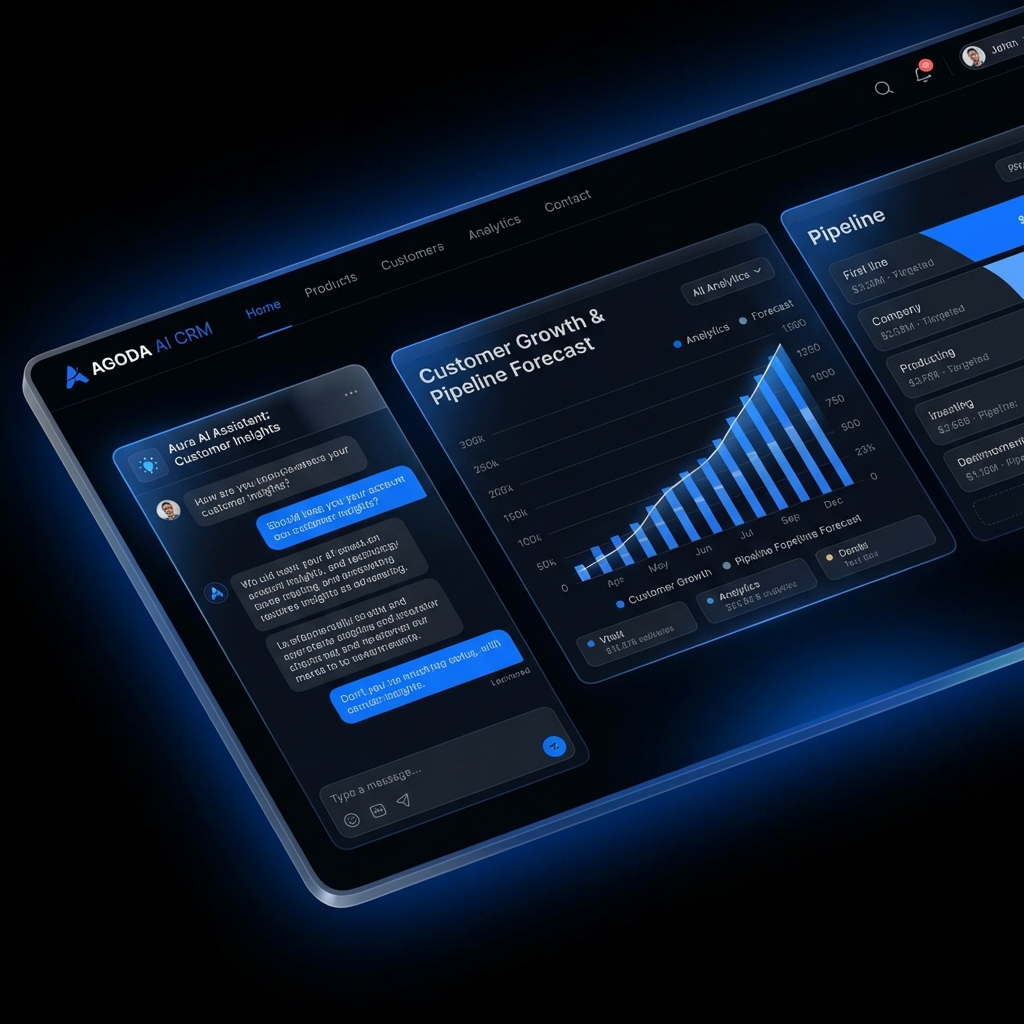
AI Chatbot Portfolio Banner
Case Study

Lastman AI CRM

Leading the End-to-End Conversational UX Strategy.
Translating LLM capabilities into human-centered interactions.

Role: Senior Product Designer Type: AI & Conversational UX Year: 2025
87%
Satisfaction Rate
12%
Conversion Lift
5 sec
Avg. Response Time
10K+
Monthly Conversations
Explore Case Study ↓

The Challenge & Solution

❌ The Problem

Thai SMEs lose 40% of potential customers because they can't respond to LINE, Facebook, and Instagram messages fast enough.

  • Overwhelmed owners: Manually responding to hundreds of messages daily
  • Limited resources: Can't afford dedicated customer service teams
  • Complex tools: Existing chatbot platforms are too technical for SMEs
  • Cost concerns: Afraid of expensive AI solutions

✅ The Solution

An AI-powered conversational CRM that's simple to set up, affordable, and smart enough to handle real customer conversations.

  • 5-minute setup: No coding or technical knowledge required
  • Learns from your business: Upload documents, AI understands your products
  • Multi-channel: Works with LINE, Facebook, Instagram, WhatsApp
  • Smart triggers: Responds only when appropriate
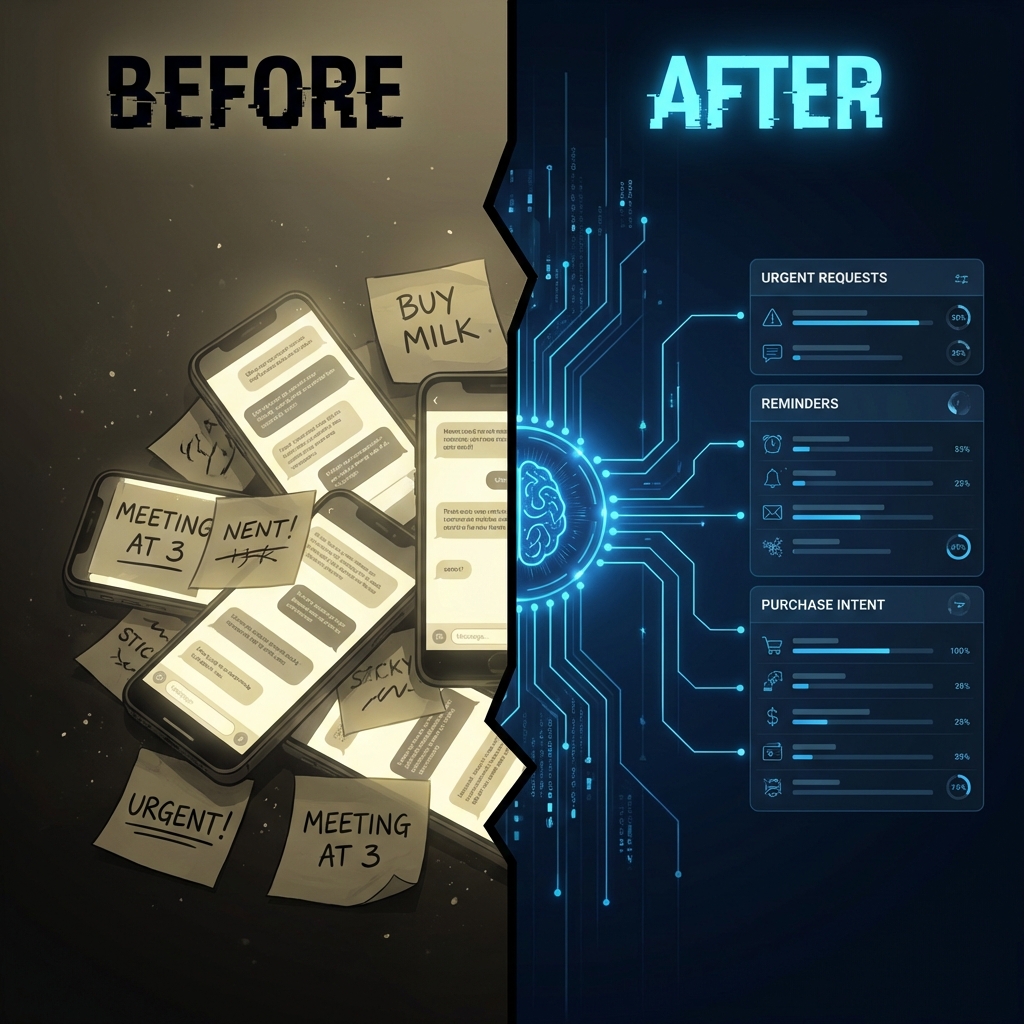
Before and After Comparison

Understanding the Users

👥

User Interviews

Conducted interviews with 15+ SME owners across retail, food, and service industries

📊

Key Findings

68% reported losing sales due to slow response times. Average response time: 2+ hours

💡

Main Pain Points

"I don't have time" • "Too complicated to setup" • "Afraid of AI costs"

"I get 200+ LINE messages a day. By the time I respond, customers have already bought from competitors."
— Restaurant Owner, Bangkok

From Research to Solution

01

User Journey Mapping

Mapped the entire customer conversation flow, identifying friction points and automation opportunities

02

Progressive Disclosure UX

Designed a stepped interface that hides technical complexity while maintaining flexibility for power users

03

Conversation Design

Created AI personality templates and trigger logic to ensure natural, contextual responses

04

Prototyping & Testing

Iterated based on usability testing with real SME users, refining setup flow and AI configuration

AI & Conversational UX Design

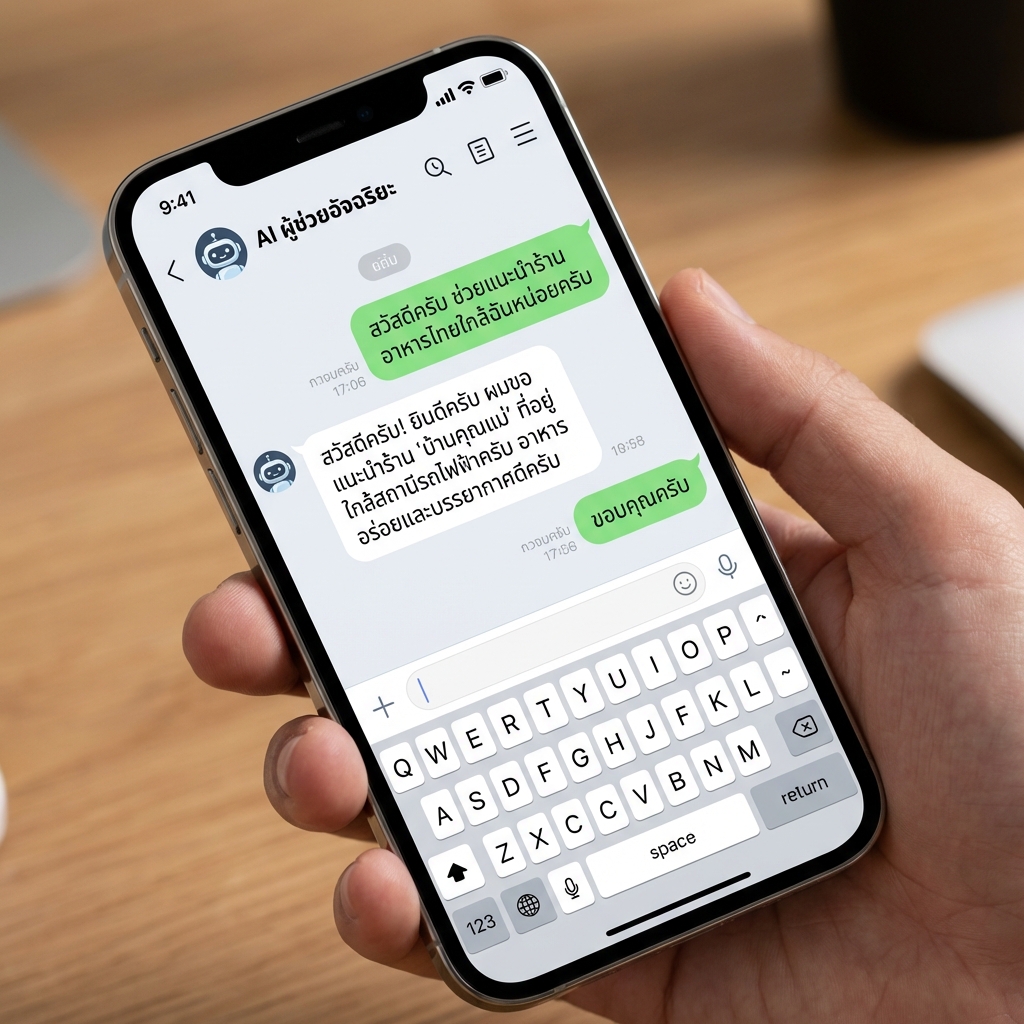
Mobile Chat Interface

🤖 Conversational AI Engine

Designed a multi-tier AI system that adapts to business needs:

  • Always-on mode: Responds to every message (best for high-touch businesses)
  • Keyword triggers: Activates only for specific topics (focused approach)
  • Knowledge Base mode: Answers only when data exists (conservative, accurate)
Design Decision: Different businesses have different needs. A restaurant wants chatty AI, while a law firm needs conservative precision.
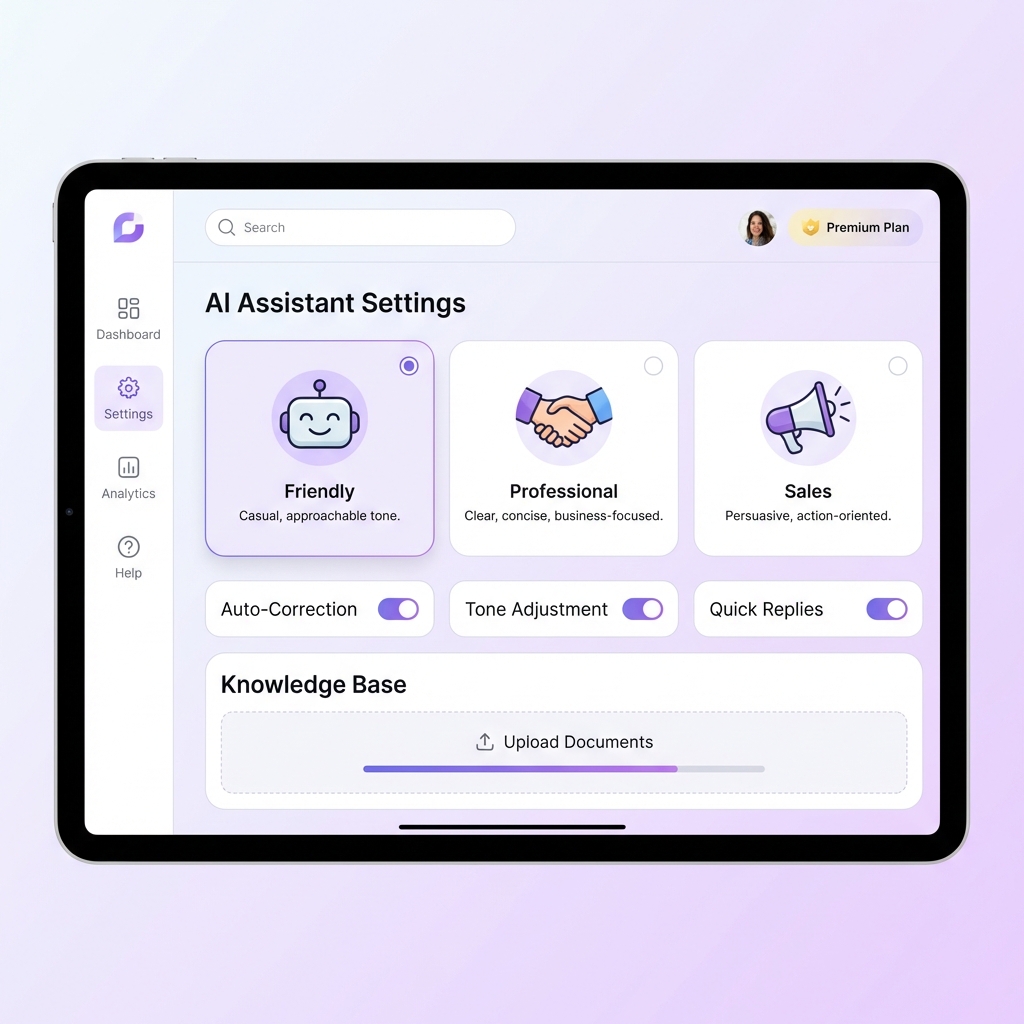
AI Settings Interface

🎭 Personality Templates

SME-friendly AI configuration without technical jargon:

  • Friendly: Casual, approachable tone with emojis
  • Professional: Formal language, business-focused
  • Sales: Persuasive, action-oriented responses
  • Custom: Full control for advanced users
Design Decision: Instead of asking SMEs to write "system prompts", we give them personality choices they understand.
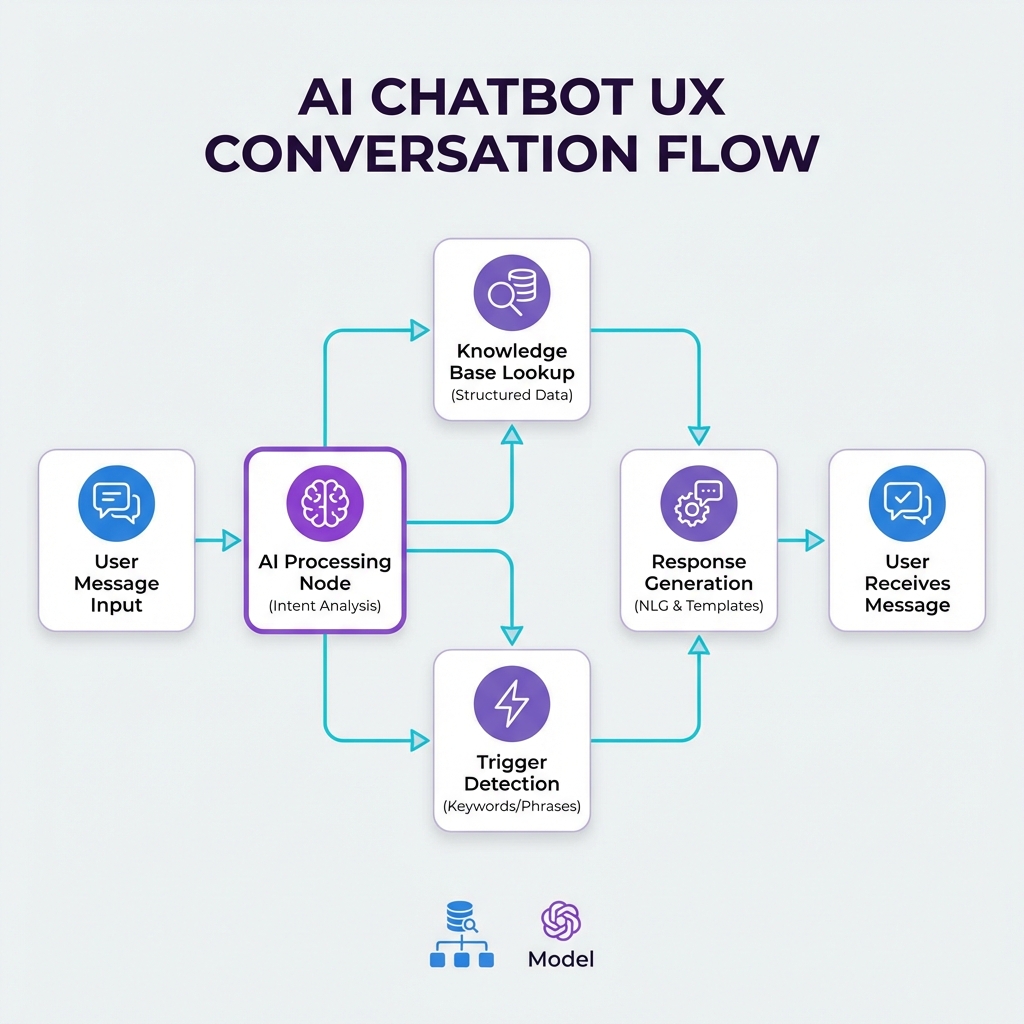
Conversation Flow

🧠 Context-Aware Responses

Engineered a hard guard system to prevent AI hallucination:

  • Scope detection: Identifies in-scope vs off-topic messages
  • Graceful bridging: Redirects off-topic queries back to business
  • Confirm-before-write: Validates contact data before storing
  • Follow-up scheduling: Understands time-based responses in context
Design Decision: LLMs can hallucinate. We built guardrails that maintain natural conversation while staying on-brand.
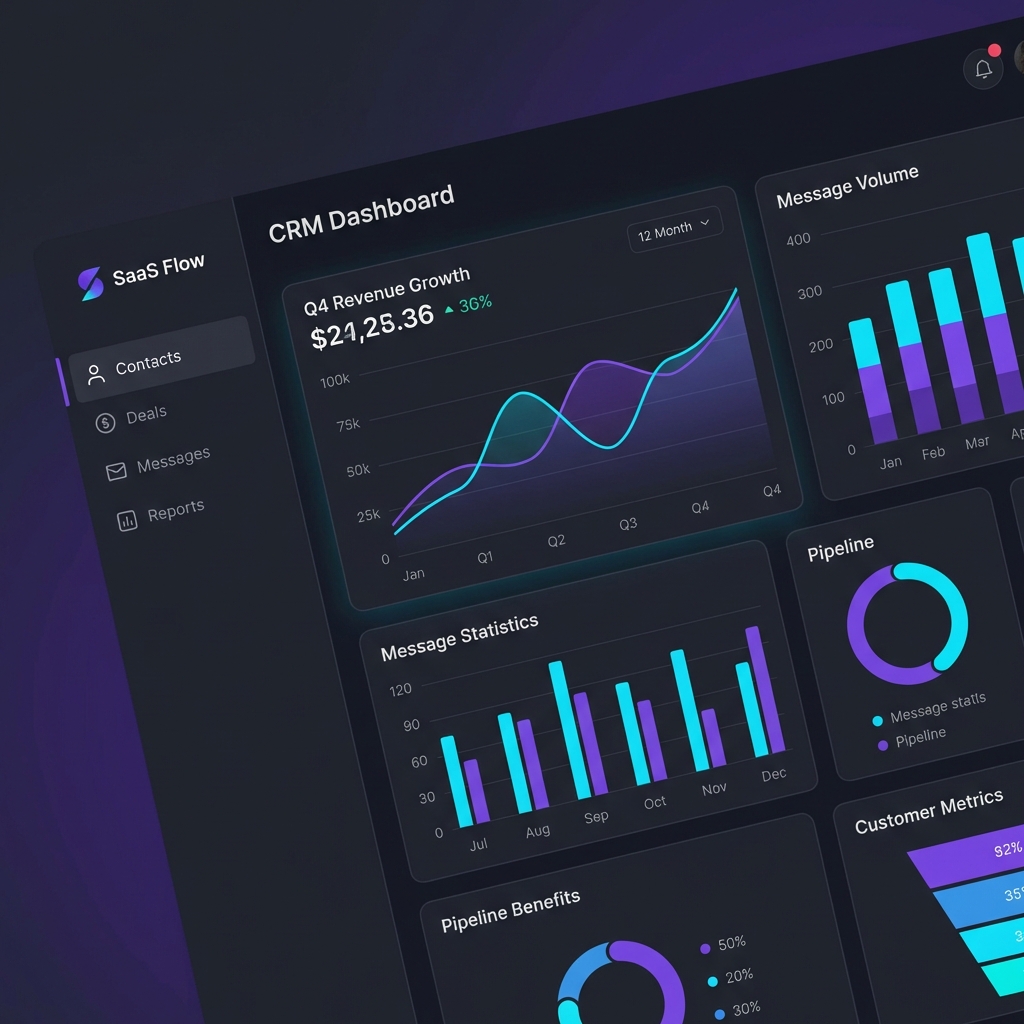
Analytics Dashboard

📊 Data-Driven Insights

Analytics dashboard to measure AI performance:

  • Message volume: Track conversations handled by AI
  • Satisfaction scores: User feedback on AI responses
  • Conversion tracking: Lead capture and sales impact
  • Cost monitoring: API usage and budget control
Design Decision: SMEs need proof that AI works. Clear metrics build trust and justify the investment.

Designing for Ambiguity

The Challenge: Incomplete Intents

Users rarely speak in perfect commands. A critical design challenge was handling ambiguous intents like "Reschedule" without specific dates.

UX Decision: Slot Filling Mode
Instead of erroring out or guessing, I designed a conversational state that detects missing parameters and triggers a specific question flow to guide the user.
User: "I want to change my booking."
⚠️ System Logic: Intent `reschedule` detected. Missing `date`. Confidence < 90%.
AI: "I can help with that. What date would you like to switch to?"
UX Action: Trigger `slot_filling` mode. Offer date picker UI (Quick Reply).

Why? This prevents friction and builds trust by showing the AI understands the goal but needs detail.

Systems Thinking & AI Architecture

🧩 Multi-Tenant Architecture

Designed 2-tier system: Global AI Config (admin manages API keys, models) + Brand Settings (SMEs customize personality, triggers).

Why? Centralized cost control while giving brands flexibility.

🔒 Privacy & Data Safety

Implemented observed → pending → confirmed flow for contact data. Never overwrites phone numbers (used as channel IDs).

Why? Data integrity + privacy compliance.

🎯 Constraint: Hallucinations vs Safety

Trade-off: Prioritized accuracy over creativity in critical flows.

Implemented Strict RAG (Retrieval-Augmented Generation) that refuses to answer if data isn't in the knowledge base, rather than guessing.

Why? In business contexts, "I don't know" is better than a wrong answer.

📱 Cross-Platform Consistency

Unified conversation interface across LINE, Facebook, Instagram, WhatsApp with platform-specific optimizations.

Why? Each platform has unique UX patterns users expect.

Design Philosophy: Progressive Disclosure

Hide complexity from beginners, reveal power features for advanced users. SMEs see "Friendly vs Professional" while system manages temperature, max tokens, and embeddings behind the scenes.

Hypothesis & Validation

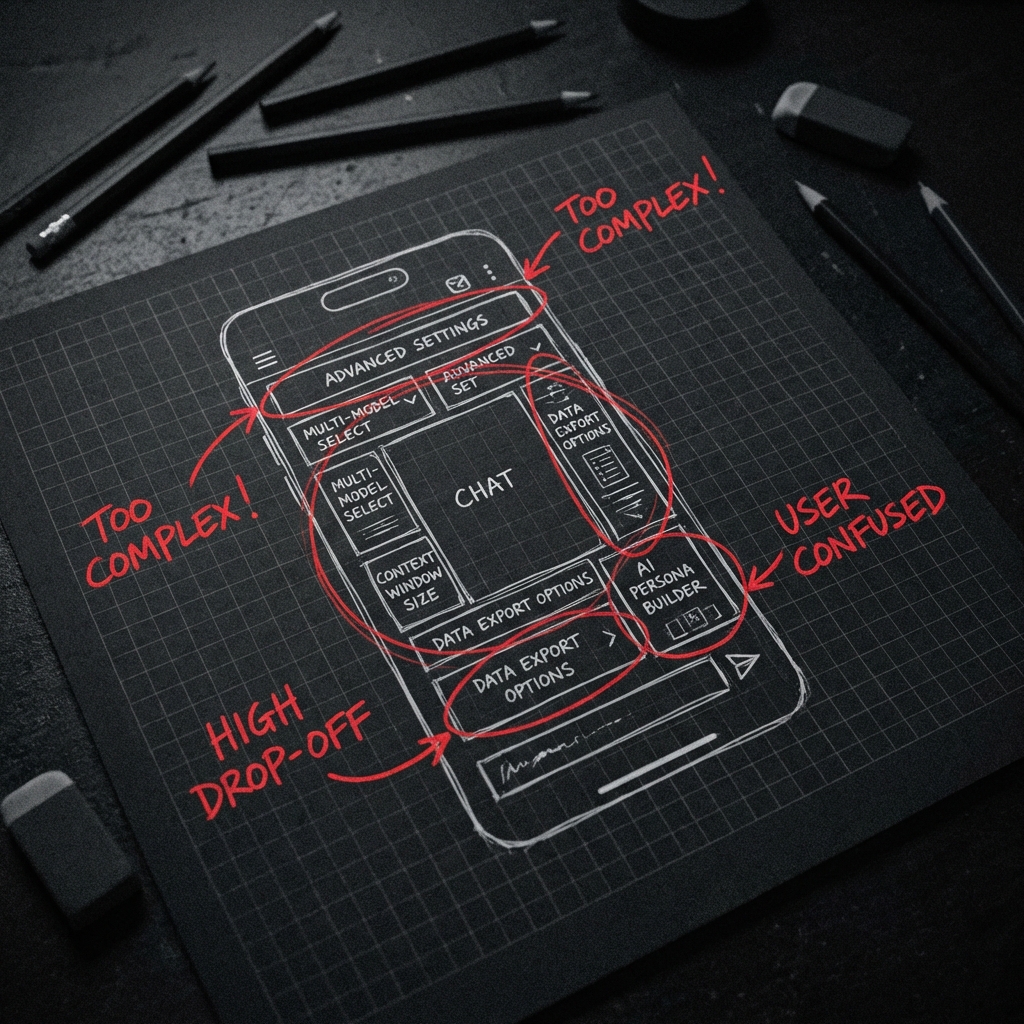
Failed Wireframe Concept - Initial Complexity
FAILED ITERATION

The Trap of "Feature Parity"

Initial Hypothesis: "Power users want granular control key parameters (Temperature, Context Window) directly in the chat interface."

❌ The Reality (Usability Fail)

Testing revealed a 60% drop-off during setup. Users were overwhelmed by technical jargon ("Tokens?", "Temperature?") and hesitated to deploy.

The Strategic Pivot:

  • Removed all technical controls from the primary view.
  • Introduced "Behavioral Presets" (e.g., "Creative Assistant", "Strict Support") that auto-configure parameters.

Measurable Business Outcomes

87%
Completion Rate

Impact of Smart Suggestions: "Quick Reply" chips reduced typing effort, directly increasing flow completion from 65%.

12%
Conversion Rate Increase

Measured against baseline of manual responses

0s
Perceived Latency

Impact of Token Streaming: Visual feedback starts instantly, masking the 2-3s actual API processing time.

10K+
Monthly Conversations

Automated across 50+ business brands

5 min
Setup Time

From signup to first AI response

98%
Uptime Reliability

99.8% message delivery success rate

"ตั้งค่าง่ายมาก ไม่ต้องเข้าใจเทคนิค AI เลย ตอนนี้ลูกค้าได้รับคำตอบทันที แม้เราไม่ว่าง"

— Coffee Shop Owner, Chiang Mai

"Sales เพิ่มขึ้น 15% ในเดือนแรก เพราะไม่พลาดลูกค้าที่แชทมาตอนดึก"

— E-commerce Business, Bangkok

Insights & Future Vision

🎯 What Worked

  • Progressive disclosure: Hiding technical complexity dramatically reduced setup friction
  • Template-based design: Personality templates were more intuitive than free-form prompts
  • Hard guard system: Preventing off-topic responses increased user trust in AI
  • Multi-channel support: Businesses loved managing all platforms from one dashboard

🔄 What I'd Do Differently

  • Voice UX: Add multimodal support for voice messages (common in Thai LINE usage)
  • Proactive outreach: AI initiating conversations based on user behavior patterns
  • A/B testing UI: Built-in framework for testing different AI personalities
  • Localization depth: More Thai cultural context in default templates

🚀 Future Enhancements

  • Recommendation engine: AI suggests products based on conversation history
  • Sentiment analysis dashboard: Real-time mood detection for escalation
  • Integration with travel/e-commerce: Booking flows, inventory sync
  • Voice assistant: Expand to phone call automation